



.jpeg)




.jpeg)
.jpeg)
.jpeg)


.jpeg)
.jpeg)
.jpeg)
.jpeg)
.jpeg)
.jpeg)


.jpeg)


.jpeg)
.jpeg)
.jpeg)

.jpeg)


Sinfin_Campervans_NJ70NCU.jpeg)

.jpeg)
Sinfin_Campervans_GJ70FFU%20RK71XAFSinfin_Campervan.jpeg)




Early Spring Road Trip: West Bay Cliffs, Lud’s Church, Malham Cove & More
Updated: May 16

Early spring is one of the best times to tour the UK by campervan. The roads are calmer, the views feel wilder, and popular places still have that “you found it first” feeling, before Easter crowds and summer queues arrive. The trade-off is obvious: the weather can be moody. But if your van is set up for damp gear and quick warm-ups, that’s exactly what makes spring trips feel special.
In this guide, we’ll stitch together a few genuinely brilliant UK spots, West Bay cliffs, Lud’s Church, Malham Cove, and some “proper adventure” detours like Speke’s Mill Mouth, in a way that works for a VW Transporter-style road trip. This isn’t a checklist. It’s a set of route ideas and rhythms you can use to build a 3–6 day spring escape.
Why do these places hit differently in early spring
Spring turns the UK into a contrast machine: sea mist and sudden sunbursts on the coast; mossy woodland paths that feel like film sets; limestone landscapes that look cleaner and brighter after rain. It’s also the season where you’re not chasing heat, you’re chasing atmosphere.
That’s why these spots work:
Coastal cliffs look dramatic even under grey skies.
Deep woodland gorges feel mystical when the ground is damp and green.
Limestone coves shine after a shower when light breaks through.
And because you’re in a campervan, you can shift plans quickly: coast if the inland forecast looks grim, woodland if the coast is windy, or a market-town stop if you want a warm café reset.
Route 1: Jurassic Coast drama – West Bay Cliffs

West Bay is one of those places that doesn’t need perfect weather. If you get blue skies, it’s postcard gorgeous. If you get wind and cloud, it feels cinematic, cliffs and waves doing their thing while you’re wrapped up in a beanie, wondering why you ever waited for summer.
The key to enjoying West Bay in spring is timing:
Arrive late afternoon, park up, and do a short walk as the light drops.
Wake early and do the cliff path before the day-trippers arrive.
Use the van as the warm base: quick change, hot drink, then go again.
From a campervan perspective, this is where a good “wet kit zone” matters. You want boots and coats controlled at the door so you don’t carry the coats into your cushions.
Van-life tip for the coast: wind amplifies cold. Even if the temperature looks fine, bring one extra layer and plan a quick warm-up routine when you return (heater on low + cracked vent = warm and dry).
Route 2: The woodland “cathedral” – Lud’s Church
If you want a spring trip that feels like discovery, Lud’s Church is it. It’s not a mountain. It’s not a coastline. It’s a mossy, enclosed gorge that feels like nature built a secret corridor and forgot to tell most people.
Early spring is perfect here because:
The green is richer (moss loves damp)
The air is cooler (you can walk without overheating)
The place feels quieter (outside peak weekends)
This is also where campervans shine. You can do the walk, return to the van, make lunch, dry socks, and still have the afternoon for a second stop, another short walk or a nearby town café.
Van-life tip for woodland: the damp is real. The win is ventilation. Keep a small vent open overnight and do a 2-minute morning dry-out: heater on low, windows cracked, and a quick wipe of the glass. That’s how you avoid that musty “spring van smell.”
Route 3: The big-limestone payoff – Malham Cove

Malham Cove is the kind of place that makes you feel small, in a good way. The rock face, the amphitheatre effect, and the scale of it all are a proper reward for a spring road trip.
What’s great about visiting in early spring is that you can still feel the landscape without battling peak-season foot traffic.
Walk it, take it in, then retreat to the van for warmth and something hot. That’s the rhythm: big views, cosy base, repeat. This is also a perfect “two-stop day” area: start with the cove, then follow it with a short walk or a stop in town for food and rest. If the weather shifts, you can swap the second stop for a café and still feel like you’ve had a full day.
Van-life tip for limestone areas: wind + open ground = chill. Pack a warm hat and gloves, even if it’s “technically spring.” You’ll thank yourself.
The “proper adventure” detour – Speke’s Mill Mouth

Some spring trips need a bit of wildness. Speke’s Mill Mouth gives you that: a more rugged, remote coastal feel that’s perfect for people who want the walk to feel like an achievement.
This is where the campervan becomes the advantage, not just transport. You can finish a windy walk, step into a warm van, and immediately feel like you’ve won the day. That’s the daily-driver camper lifestyle: you don’t have to “end the trip” when you’re cold, you just return to comfort.
Van-life tip: if your van has a diesel heater, this is where it earns its keep. If you don’t, a well-insulated setup with warm lighting and dry air still makes the difference between “never again” and “let’s do this next year.”
“Doors of Durin”, Slater’s Bridge, Slaters Bridhe, etc. — how to use “bucket-list stops” properly
These kinds of names tend to go viral in van-life circles because they sound mythical, and often, the places feel it. Whether you’re talking about a dramatic stone feature, a cinematic bridge, or a hidden coastal/woodland gem, the spring strategy stays the same:
Build them as single-hero moments, not a packed day with five stops.
Pair them with one low-effort “comfort stop” (a town, a café, a sheltered walk).
Keep your plan flexible. Spring weather rewards route options, not rigid schedules.
If you want, tell me which region you’re based in (or where you’re starting from), and I’ll map these into a realistic loop with drive times that don’t ruin the trip.
The spring campervan setup that stops trips from getting ruined
Early spring touring is easy if you control three things: moisture, warmth, and wet gear.
1. Moisture control (condensation prevention)
Keep a small vent open overnight (pop-top mesh or roof fan on low).
Wipe windows in the morning (microfibre lives by the door).
Don’t dry wet coats on cushions; create one “drip zone”.
2. Warmth without overthinking
Layer clothing; don’t rely on heat alone.
Warm the van in short bursts, with airflow.
If you tour off-grid often, a diesel heater is the simplest comfort upgrade.
3. Wet-gear discipline
Boots on a tray by the door.
Wet coats on one hook/rail.
Towel ready. Water stays in one place.
This is the difference between a spring trip that feels cosy and one that feels like a damp chore.
Make it a Sinfin-style spring trip
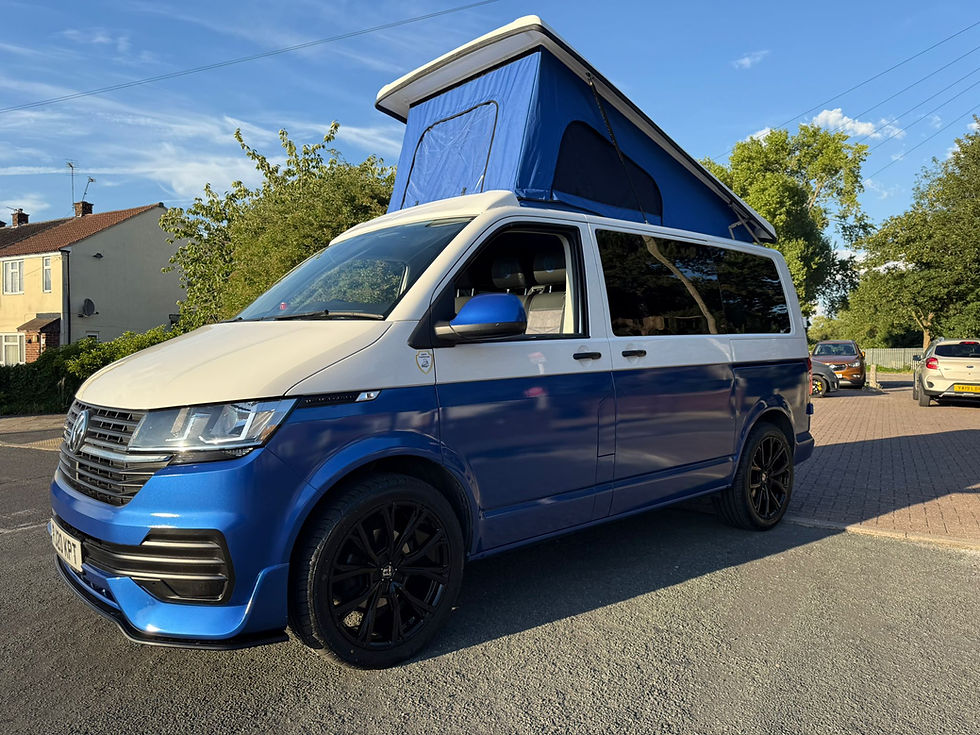
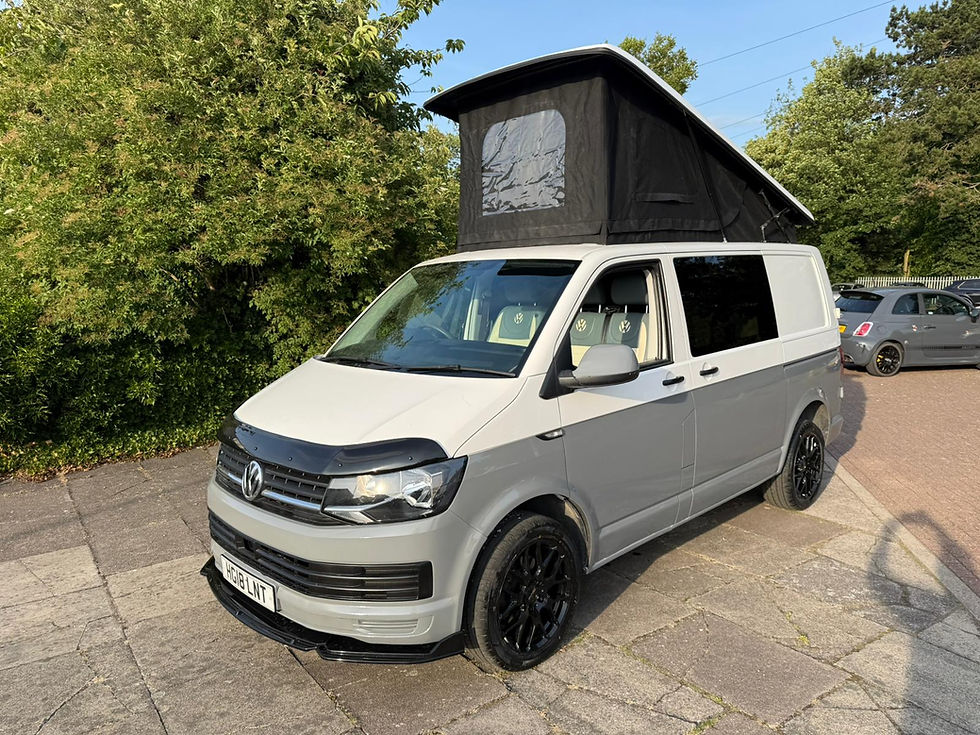
Whether you’re buying a ready camper or bringing your own Transporter to convert, the goal is the same: a van that handles real UK travel, wet coats, quick meals, easy sleep, and warm evenings.
Browse ready-to-tour options: Vans for Sale
Bring your own van, and we’ll transform it: Services
Book a viewing or conversion chat: Contact
Frequently Asked Questions
When is the best time for an early-spring campervan trip in the UK?
Late March to mid-April hits the sweet spot — roads are calmer, the famous beauty spots haven't filled up yet, and daylight stretches enough for proper walks. Just plan around showers and bring layers.
Can you wild camp at West Bay or Malham Cove?
Wild camping isn't allowed at either, but there are paid sites and informal motorhome stops within 10–20 minutes of both. Always arrive late, leave early, and check signage — these are popular spots and locally sensitive.
Is Lud's Church accessible in a campervan?
You can't park at Lud's Church itself — the closest sensible base is Gradbach (paid car park) or the Roaches. From there it's a 30–45 minute walk through woodland. Don't try to take a Transporter up the tighter lanes after dark or in rain.
How many days do I need for a UK spring road trip?
Three to six days hits the right rhythm — enough to fit two or three significant stops without rushing. A 3-day trip suits one region; 5–6 days lets you stitch coast and peaks together.
What kit do I need for an early-spring UK trip in a campervan?
Waterproof boots, a fast-warm-up layer for after walks, a diesel heater or EHU plan for cold nights, and a roof vent or window crack to manage condensation. Don't skip a doormat — spring mud is relentless.


Comments