



.jpeg)






.jpeg)

.jpeg)
.jpeg)


.jpeg)
.jpeg)
.jpeg)
.jpeg)
.jpeg)
.jpeg)


.jpeg)


.jpeg)
.jpeg)
.jpeg)

.jpeg)


Sinfin_Campervans_NJ70NCU.jpeg)

.jpeg)
Sinfin_Campervans_GJ70FFU%20RK71XAFSinfin_Campervan.jpeg)



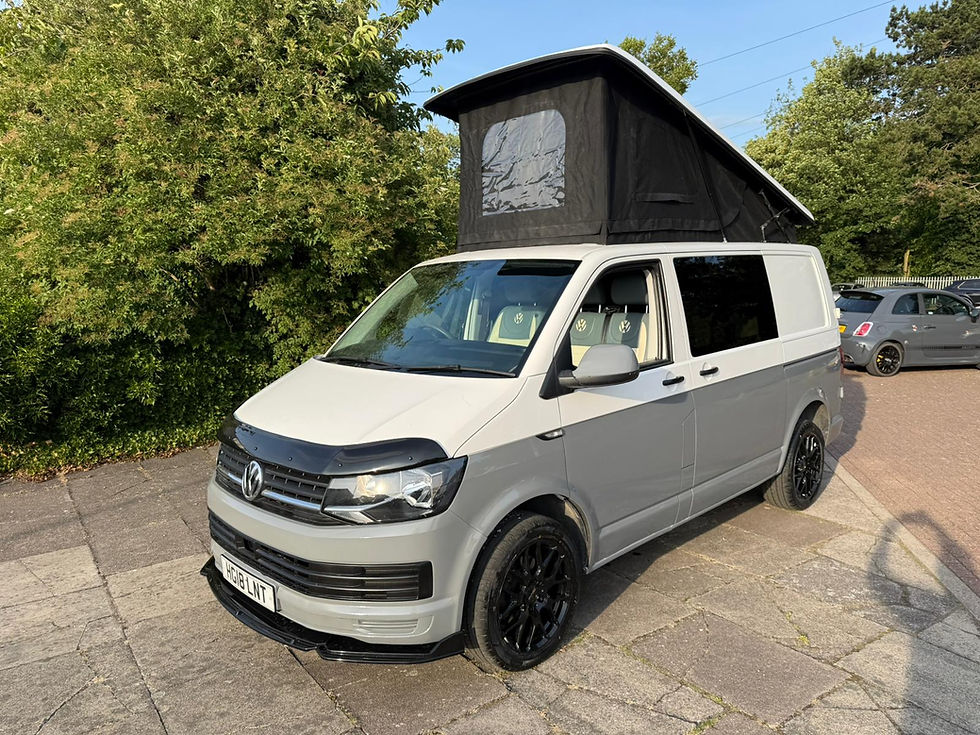


Campervan Condensation (UK): A No-Nonsense Guide on How to Prevent Damp & Mould.
Updated: May 16

Condensation is the quiet killer of comfort. One cold night, a closed vent and two people breathing can dump up to a litre of water into a compact van. Left unchecked, that moisture becomes musty cushions, black mould in window rubbers and swelling furniture boards.
This guide gives UK-ready tactics for pop-tops and high roofs, so you stay dry, warm and worry-free. Need a winter health check, thermal screens or a roof fan? Explore Services, see winter-ready Vans for Sale, or Contact us for advice.
1. Ventilation Rules - the bit most people skip
Moisture in = moisture out. You can add heat, insulation and screens, but without controlled airflow, you’ll still wake to wet windows.
The 3-vent rule
Crack a roof vent or pop-top mesh 5–10 mm all night.
Open a leeward side window slightly (the side out of the wind) to avoid draughts.
Leave cab window screens fitted, but allow a small air gap at the top.
This creates a gentle chimney effect: warm, moist air rises and escapes; drier air is drawn in low. It feels counterintuitive, small vent, big difference.
Bonus: Cook with a lid on, run the extractor/roof fan on low, and boil only the water you need. Steam is the fastest way to flood a small space.
2. Thermal Wraps & Window Screens Pop-top and High roof
Why they work: Thermal layers move your dew-point outward, so water condenses on the screen, not on your glass or canvas.
Pop-top specifics
External pop-top wrap: Adds a still-air layer, cuts radiant heat loss and protects canvas from dew. Look for wraps with elasticated skirts and storm straps.
Internal roof liner: Quilted liners clip to the pop-top frame to reduce cold-surface contact.
High-roof specifics
Full cab screens (external): Best for windscreen/doors, external covers stop the glass itself from cooling overnight.
Insulated rear window pads: Press-fit or magnetic pads for rear quarters keep the living area stable.
Fit sequence: dry glass, external screen/wrap, close doors carefully to avoid wicking rain under the cover, create your small overnight vent.
Not sure which set you need for your Transporter generation? We can supply and fit, check Services.
3. Soft-Furnishing Care (stop mould before it starts)
Fabric and foam hold moisture. Keep them dry, and they’ll last for years.
Breathable undersides: Where cushions meet plywood, add ventilated boards or 3D mesh (Dry-Mat style) so air can circulate.
Rotate cushions: If you sit/sleep in the same spot, rotate weekly in winter to avoid permanent damp patches.
Choose quick-dry fabrics: Microfibre or technical weaves shed moisture better than heavy cottons.
Bag your bedding: In very wet spells, store duvets in breathable sacks by day, then lay them out after the evening heat cycle.
De-sand & de-salt: After beach trips, brush off salt (it holds moisture), then run a 10-minute warm-up with vents open.
4. Heat the Air, Not the Condensation
Heating alone doesn’t remove water, but it enables ventilation to do the job.
Diesel air heater: Efficient, dries the cabin air and can pre-warm before bed. Run on low with a cracked vent for the best dry-out.
On hook-up (EHU): A small ceramic or panel heater plus trickle ventilation works well. Avoid open-element heaters near soft furnishings.
Fan-assist: Even on low, a roof fan in exhaust mode accelerates the chimney effect without chilling you.
Target routine: 15–20 minutes of gentle heat while you wind down; vents cracked; heater off or very low overnight; 10 minutes of warm, ventilated air first thing.
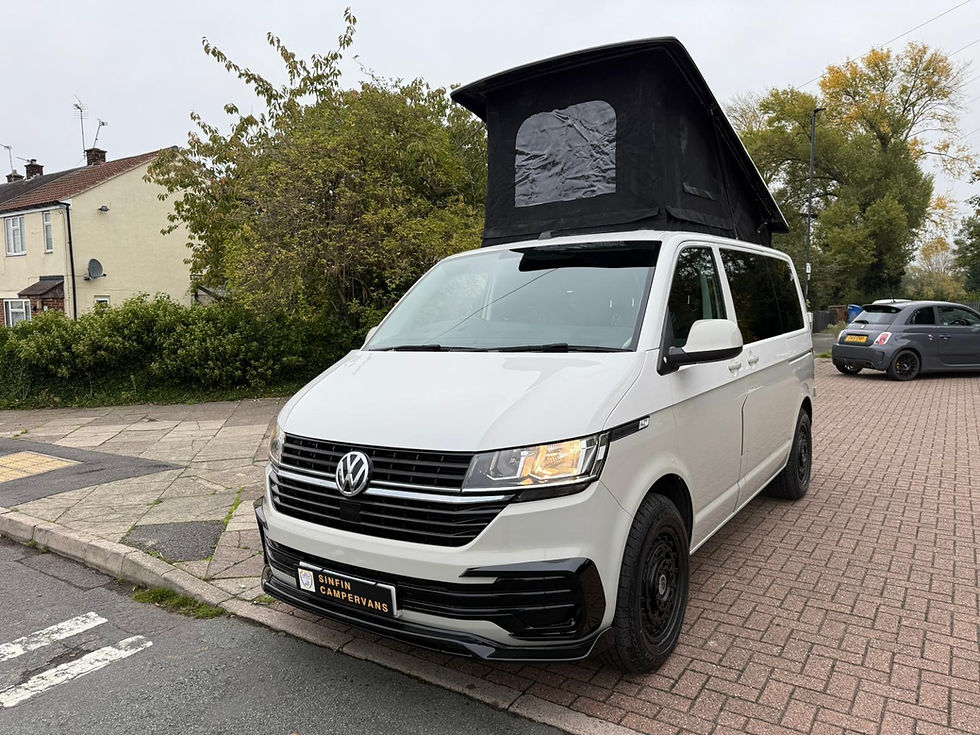
See the gallery below showing the van, which was sealed off with no ventilation.
5. The 5-Minute Morning Routine (copy/pin this)
Vent & warm: Roof fan low or window cracked; run heater for 5–10 minutes.
Wipe glass & metal: Microfibre + small squeegee on windscreens and aluminium frames.
Flip cushions: Stand two cushions on edge to air the underside while you make coffee.
Dry the canvas (pop-top): If it’s wet, keep the roof up while you pack; drop only when touch-dry.
Open a dry locker: Leave one overhead locker or bed box ajar so trapped air can escape.
Total: ~5 minutes. The van will smell fresh all day.
6. Storage & Wet-Gear Management
Water has to go somewhere; choose where.
Boot well tray: A shallow tray by the sliding or rear door for boots and umbrellas stops puddles from spreading.
Doorway towel & doormat: Catch drips instantly; hang towels as soon as you’re parked.
Dedicated drip space: A small hook rail near the door for wet coats; leave a basin underneath to catch drips.
Cook low-steam: One-pot meals, lids on, and boil less water.
7. Materials, Sealants & Hidden Damp Checks
Edges matter: Ask for PU-bonded furniture edges and sealed cut-outs. Raw chipboard edges absorb water quickly.
Check the usual suspects: Window rubbers, pop-top seals, tailgate grommets and roof-rack bolts. A single pin-hole leak mimics “condensation.”
Under-bed inspection: Shine a torch under benches monthly in winter; look for grey/black flecks (early mould). Wipe with isopropyl alcohol and dry thoroughly.
8. Off-Season Parking & Dehumidifiers
Airflow is king: If the van is stored, leave roof vents fractionally open in a secure, covered space.
Passive absorbers: Calcium chloride pots help in storage but are not a substitute for ventilation when camping.
Mains dehumidifier: Useful on driveway storage with EHU, run on a timer, doors/lockers ajar, soft goods inside.
Pop-Top vs High Roof: Quick Comparison
Topic | Pop-Top | High Roof |
Overnight airflow | Excellent via mesh windows | Good with roof fan/vents |
Heat retention | Needs wrap/liner to excel | Strong with insulation |
Dry-out speed | Fast if the roof is left up to dry | Consistent, fewer canvases to manage |
Condensation hotspots | Canvas panels & cab glass | Cab glass & metal frames |
Bottom line: Pop-tops need a wrap + mesh vent routine; high roofs need screens + roof fan and careful airflow. Both stay bone-dry when you follow the rules above.
Troubleshooting: If You Still Wake to Wet Windows
Too little airflow: Open the roof vent further or add a second low vent on the leeward side.
Cooking created steam: Switch to low-steam meals; run the fan during and 5 minutes after.
Cold-soaked cab glass: Use external screens rather than internal only.
Hidden leak: Paper-towel test around seals after rain; track and reseal.
Ready for a drier, warmer winter?
Book a winter health check (screens, wraps, fans, heater service) via Services.
Prefer to buy ready-sorted? See our winter-ready Vans for Sale.
Have a specific issue (persistent damp, suspected leak)? Contact us, and we’ll diagnose it.
Conclusion
Condensation control = gentle ventilation + thermal layers + short daily routines.Pop-tops: add a wrap/liner and keep a mesh vent open. High roofs: fit external cab screens, use a roof fan, and vent all night. Five minutes each morning prevents damp smells, protects cabinetry and keeps winter trips comfortable.
Frequently Asked Questions
Why does my campervan get so much condensation overnight?
Two people breathing on a cold night can release up to a litre of water into the air. Without ventilation that moisture lands on the coldest surfaces — windows, metal frames, canvas — and shows up as condensation by morning.
How do I stop condensation in my campervan?
Use the 3-vent rule: crack a roof vent or pop-top mesh 5–10 mm overnight, slightly open a leeward side window, and leave a small gap at the top of cab screens. This creates a gentle chimney effect that pushes moist air out.
Do thermal screens really stop condensation?
They help significantly. External thermal wraps and window screens move the dew point outward, so water condenses on the screen rather than your glass or canvas. Internal liners reduce cold-surface contact in pop-tops and high roofs.
How do I prevent mould in my campervan cushions?
Add a ventilated breather board (3D mesh) under cushions where they sit on ply, rotate cushions weekly in winter, and choose quick-dry microfibre fabrics over heavy cotton. Keep a small heater running occasionally to dry trapped moisture.
What's the morning routine to keep my campervan dry?
Five minutes does it: run the heater or roof fan for 5–10 minutes, wipe glass and metal frames with a microfibre, stand cushions on edge to air the undersides, leave the pop-top up while you pack (if wet), and open one locker so trapped air escapes.


Comments