


.jpeg)




.jpeg)
.jpeg)
.jpeg)


.jpeg)
.jpeg)
.jpeg)
.jpeg)
.jpeg)
.jpeg)


.jpeg)


.jpeg)
.jpeg)
.jpeg)

.jpeg)


Sinfin_Campervans_NJ70NCU.jpeg)

.jpeg)
Sinfin_Campervans_GJ70FFU%20RK71XAFSinfin_Campervan.jpeg)




Pop-Top vs High Roof - Which Roof Is Right for Your VW Campervan?
Updated: May 16
The roof choice that shapes everything

Before colours, cabinetry or even bed systems, your roof decision defines how your VW Transporter will live. It decides headroom, sleeping capacity, parking options under UK height barriers, wind profile on the A1/M6, and even resale appeal. Most buyers land on one of two routes:
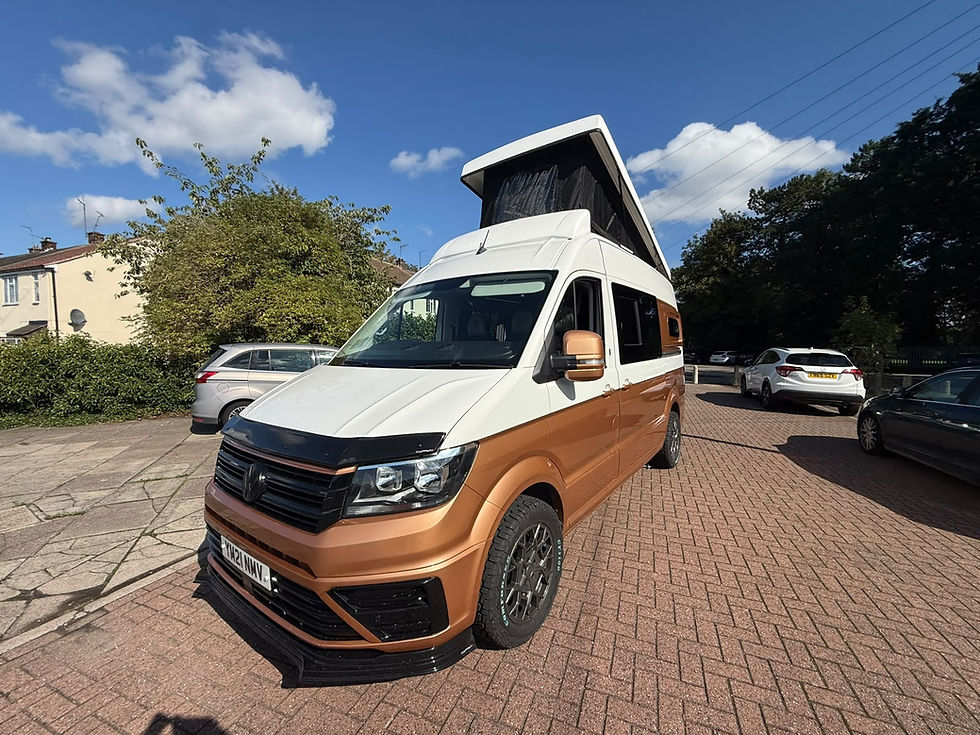
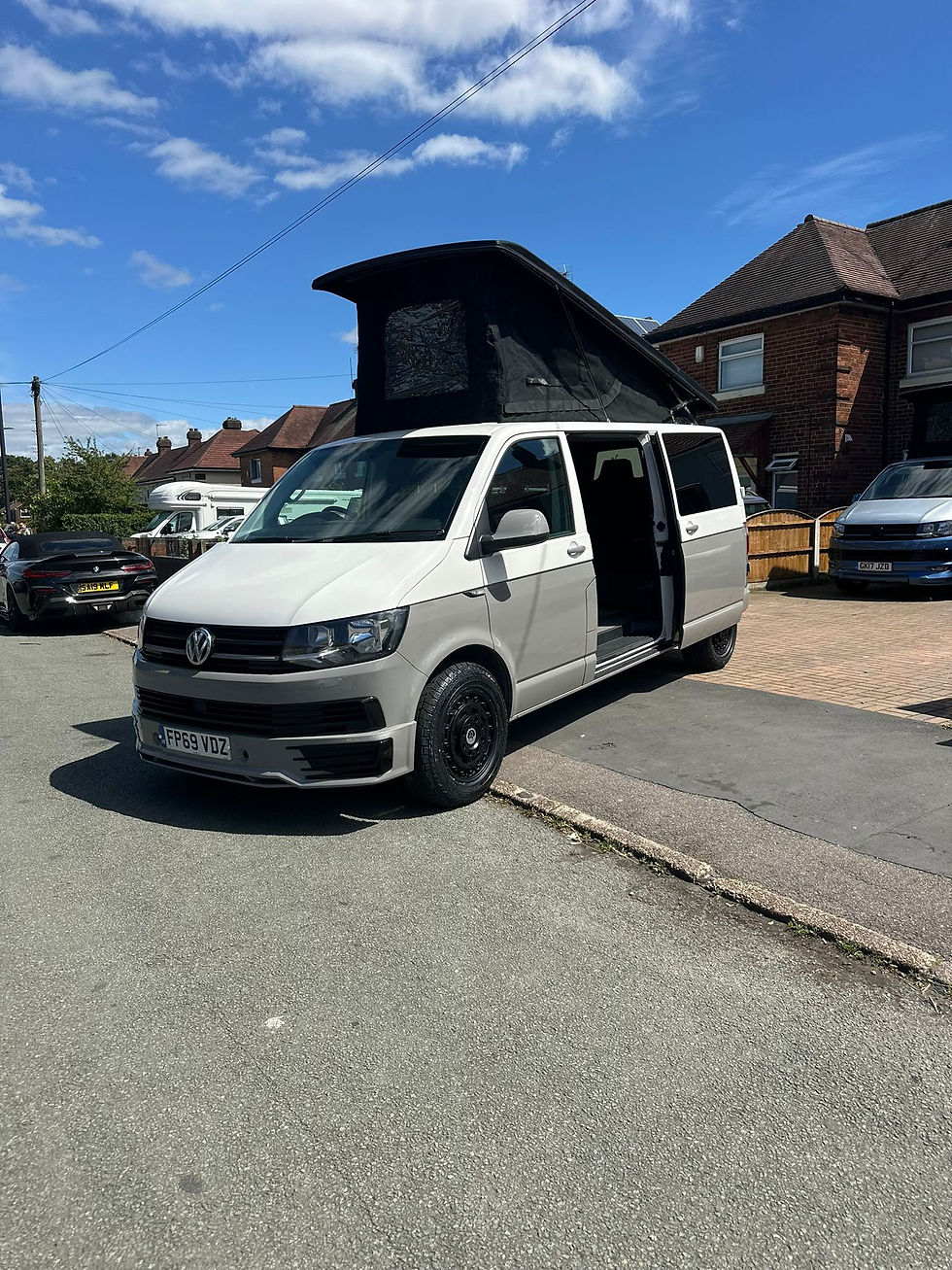
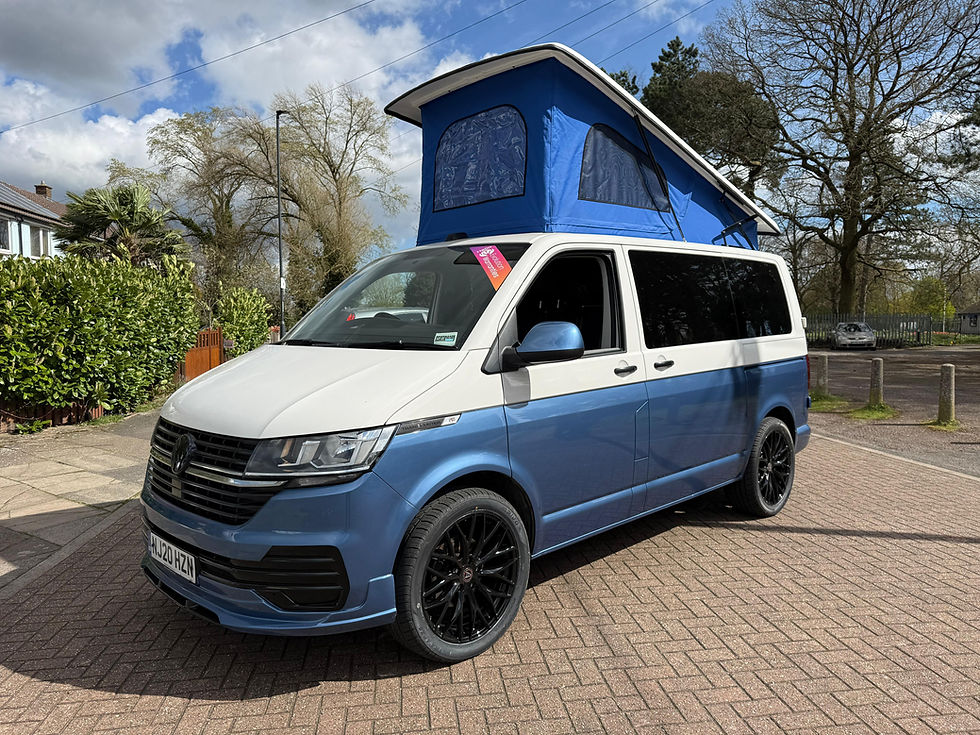
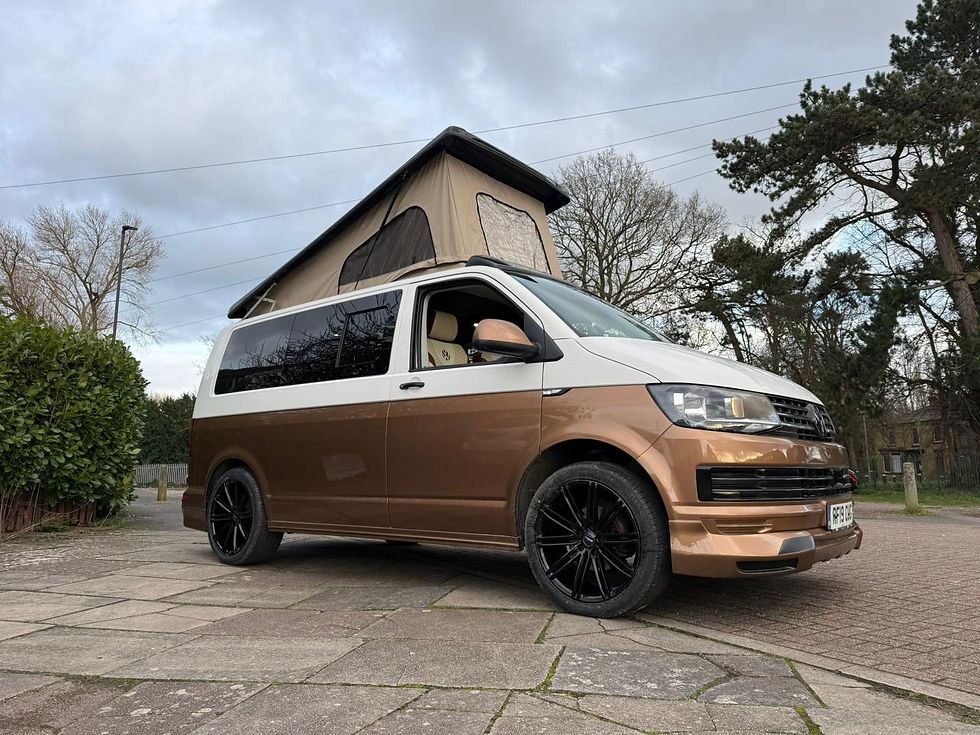
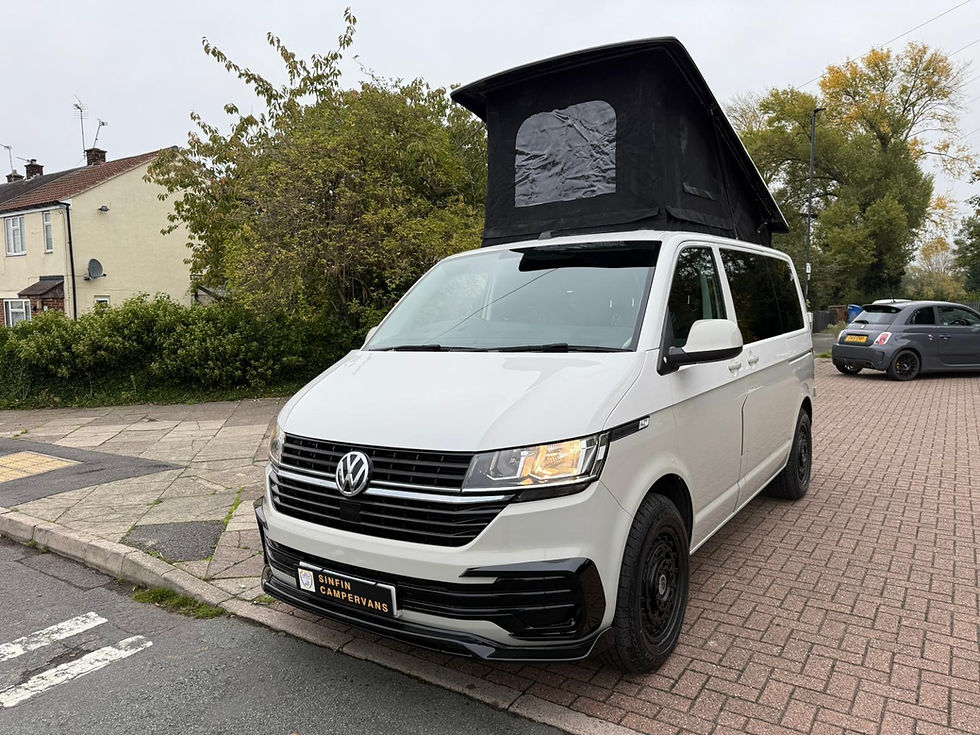
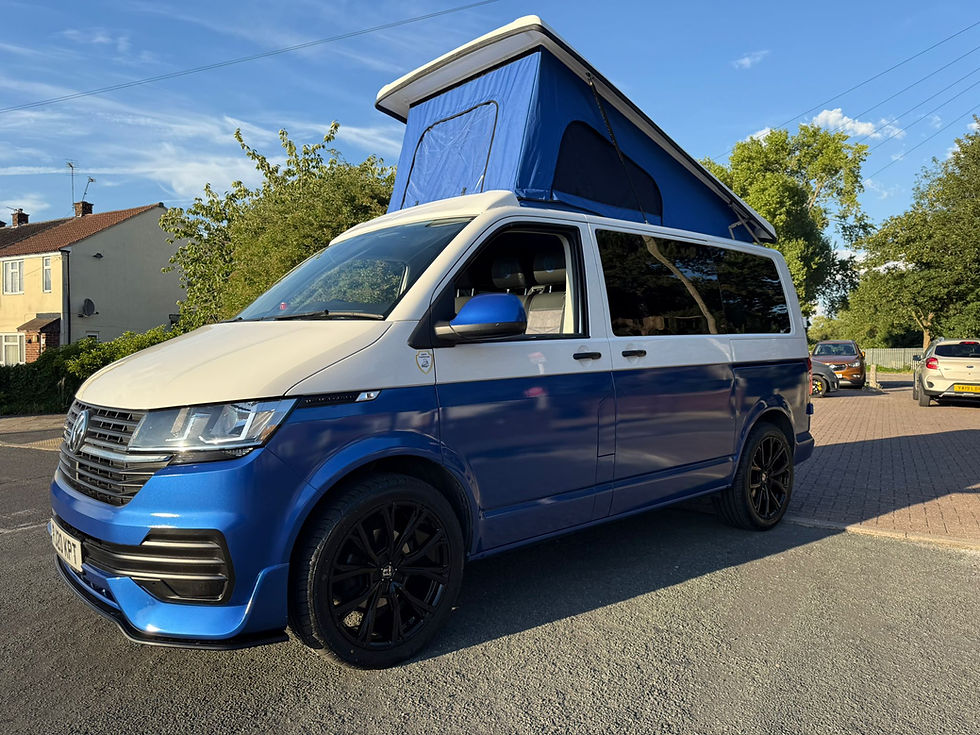
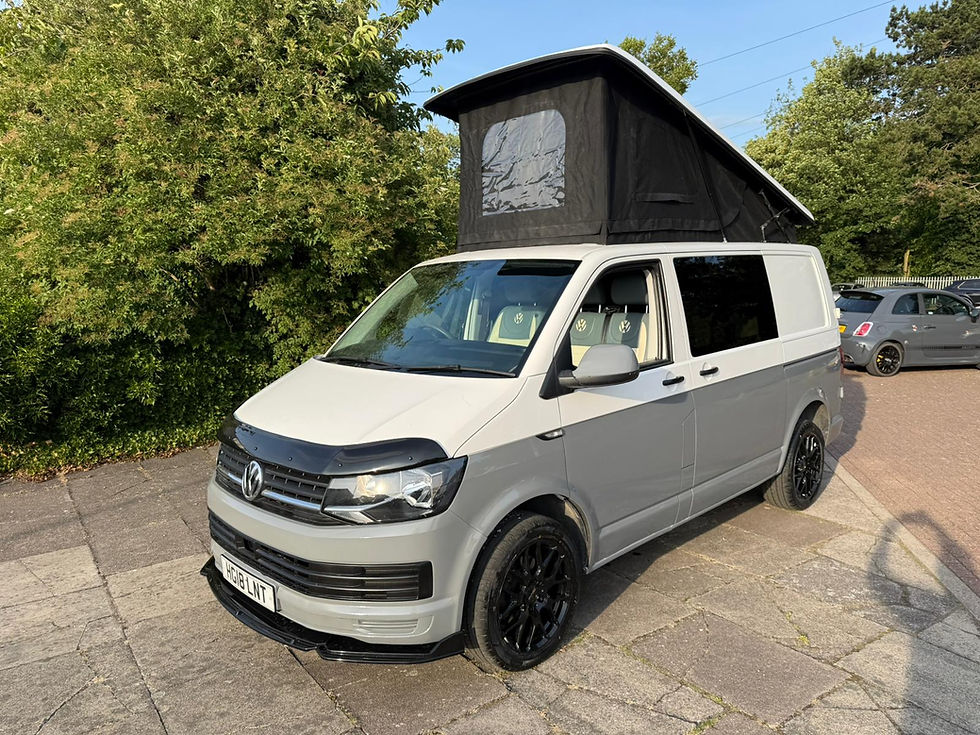
A pop-top (with optional bed board) that lifts for headroom and extra berths, then drops to a low, car-park-friendly silhouette.
A high roof that delivers permanent standing height and overhead storage without any canvas to manage.
Both are brilliant for different lifestyles. Here’s how to pick with confidence.
Pop-top: low profile, high flexibility
A modern pop-top transforms a Transporter from a van into a tiny loft. With the roof up, you gain standing height and cross-breeze ventilation; with it down, you slip under typical UK height barriers (often 1.9–2.1 m) that block many taller vans. Add a bed board and you unlock two additional berths, leaving the lower lounge free for evening use.
Where pop-tops shine in the UK
Everyday usability: You can still use supermarket and multistorey car parks with the roof down.
City + weekenders: Drive to Cornwall one weekend and commute in town the next without stressing about height.
Family layouts: Kids love the “treehouse” sleep up top; adults keep the lounge for late-night tea and a film.
Ventilation: Canvas + mesh windows give light and airflow on those humid, post-rain evenings.

Practical considerations
Weather: In winter, add an insulated wrap for warmth and to reduce condensation.
Setup: You’ll raise/lower the roof daily when touring; good gas struts and storm straps matter.
Maintenance: Keep canvas clean and dry; check seals periodically.
Insurance & install: Use reputable brands and installers; professional documentation helps with insurance and resale.
High roof: always-on headroom and storage
A high roof converts the Transporter into a mini studio. You step in and stand up always, with overhead lockers for bulky kit and winter coats. There’s no canvas, no lifting routine, and the interior can feel calmer in bad weather.
Where high roofs win
All-season touring: Extra insulation potential and no canvas drafts on wild, wet nights.
Storage-heavy trips: Overhead lockers keep bedding and jackets off the benches.
Work from van: If you’re on a laptop at a fixed desk or need a quiet, stable interior, the solid roof is bliss.
No set-up: Park, kettle on, done.
Practical considerations
Height & access: You’ll often exceed many UK barrier limits, so plan for parking and ferry brackets accordingly.
Wind profile: Taller sides can add wind noise and slight MPG penalties at motorway speeds.
Sleeping: You don’t get the pop-top bed; you’ll rely on a rock ’n’ roll or RIB bed below (or bunks if designed in).
Aesthetics: More “motorhome” than stealth; choose a clean colour and tidy side profile.

Sleeping, layouts and daily flow
Think about day and night transitions. With a pop-top + bed board, you have two sleeping zones: children or guests go upstairs while the lower lounge stays social. In a high-roof, your sleeping is usually all on the lower deck, perfect if you prefer a single bed setup, a U-shaped lounge that converts quickly, or if climbing to an upper berth isn’t ideal.
For SWB Transporters, pop-tops help retain space by moving two berths upstairs. For LWB, a high roof allows generous galleys and wardrobes with permanent headroom, but you’ll need to accept the added exterior height.
Warmth, weather and condensation (UK reality)
Pop-top: Canvas breathes well but needs help in shoulder seasons. Use thermal wraps, crack ventilation to reduce condensation, and carry a microfibre towel for quick morning wipe-downs.
High roof: Easier to insulate thoroughly; fewer drafts and simpler condensation management. Add a roof fan and controlled trickle vents for dry, warm air in winter.
Driving, height bars and ferries
Pop-top down = low profile. Multistoreys and retail parks become viable again, which is a major win in UK towns.
High roof = fewer car parks. You’ll scan for surface parking and check ferry/Eurotunnel height brackets (and pricing) before travel.
Crosswinds: Any roof adds area. Pop-tops sit lower when stowed; high roofs feel taller in gusts. Tyre choice and suspension condition matter.
Cost, installation and documentation
Prices vary by brand and spec, but broadly:
Pop-top: Roof shell + hinges/struts, aperture reinforcement, canvas, bed board (optional), finishing and headliner work. Quality brands with neat headliners and safety features (locks, straps) cost more, but resale buyers notice.
High roof: New roof shell, structural bonding, full interior finish, possible external paint/gel-coat match, overhead lockers. Often, it's a bigger interior trim job.
For both, choose experienced installers and keep the paperwork (installation photos, part numbers, instructions). This helps with insurance and future resale.
Which roof for which owner?
City-based weekender/family of four: Pop-top + bed board. Low profile for school runs and shops, two extra berths on trips.
Long-term tourer / remote worker: High roof with thoughtful insulation, roof fan, and overhead lockers for a calm, always-ready interior.
Mixed UK + Europe trips: Pop-top for barrier flexibility and easy ferry classes; add a thermal wrap for alpine nights.
Mobility or ladder-averse travellers: High roof, so you never climb to sleep.
How Sinfin can help you choose
At Sinfin Campervans, we build and stock VW Transporters with both roof types. Sleeping needs, winter plans, and how each roof interacts with U-shape lounges, side kitchens, RIB vs rock ’n’ roll beds, and electrics.
See current Vans for Sale
Contact us to book a workshop viewing or video tour
Frequently Asked Questions
Pop-top or high roof — which is better?
It depends on use. A pop-top keeps the van under 2m for car parks and only lifts when you camp. A high roof gives permanent standing height and overhead storage but loses car-park access. We recommend pop-tops for around 90% of UK customers.
Will a pop-top fit under car-park barriers?
Yes — a closed pop-top keeps the Transporter under 2m, which clears the vast majority of UK multi-storey, supermarket and station car-park barriers. A high-roof Transporter is typically 2.4–2.6m and won't.
Is a high-roof campervan warmer than a pop-top?
Yes, usually. The fixed hard roof retains heat better and lacks the cold bridge created by pop-top canvas. Pop-tops can be made winter-friendly with thermal wraps, but a high roof is simpler in cold weather.
How many people can sleep in a pop-top campervan?
Up to four — two adults on the rock 'n' roll bed below, plus two on the pop-top bed-board above. Bed-board versions add a structural floor that supports two extra berths comfortably.
Does a pop-top affect Transporter resale value?
Positively. A reputable pop-top (SCA, Reimo) typically adds £2,000–£5,000 of value at resale, more than the install cost. It's also the most-requested feature among UK Transporter buyers.


Comments