


.jpeg)




.jpeg)
.jpeg)
.jpeg)


.jpeg)
.jpeg)
.jpeg)
.jpeg)
.jpeg)
.jpeg)


.jpeg)


.jpeg)
.jpeg)
.jpeg)

.jpeg)


Sinfin_Campervans_NJ70NCU.jpeg)

.jpeg)
Sinfin_Campervans_GJ70FFU%20RK71XAFSinfin_Campervan.jpeg)




DVLA Campervan Registration (UK): What Changed and How to Get It Right in 2025
Updated: May 16

Even though DVLA’s stricter guidance dates back to October 2019, we still meet plenty of UK owners who haven’t seen the update or aren’t sure how it applies to their build.
This guide explains what the DVLA looks for when deciding whether to classify your van as a “motor caravan”, the benefits of getting it recognised, and how to prepare a clean application if you choose to register.
You don’t have to register as a motor caravan to enjoy van-life. But if your conversion meets the criteria, formal recognition can help with insurance, MOT class, and sometimes ferry pricing.
What DVLA looks for.
The DVLA splits its expectations into external and internal features. You’ll need to provide clear evidence that these clear photos and documentation matter. If your van resembles a motor caravan inside and out, you’re more likely to be reclassified.
External features (DVLA expects to see)
Two or more windows on at least one side of the body (excluding driver/passenger doors) to bring daylight into the living area.
An additional side/rear door for access to the living quarters (beyond the cab doors). If the door has a window, it counts separately toward the window requirement.
Motor-caravan-style graphics on each side of the vehicle.
Awning rail/bar on one side to accept a canopy/awning.
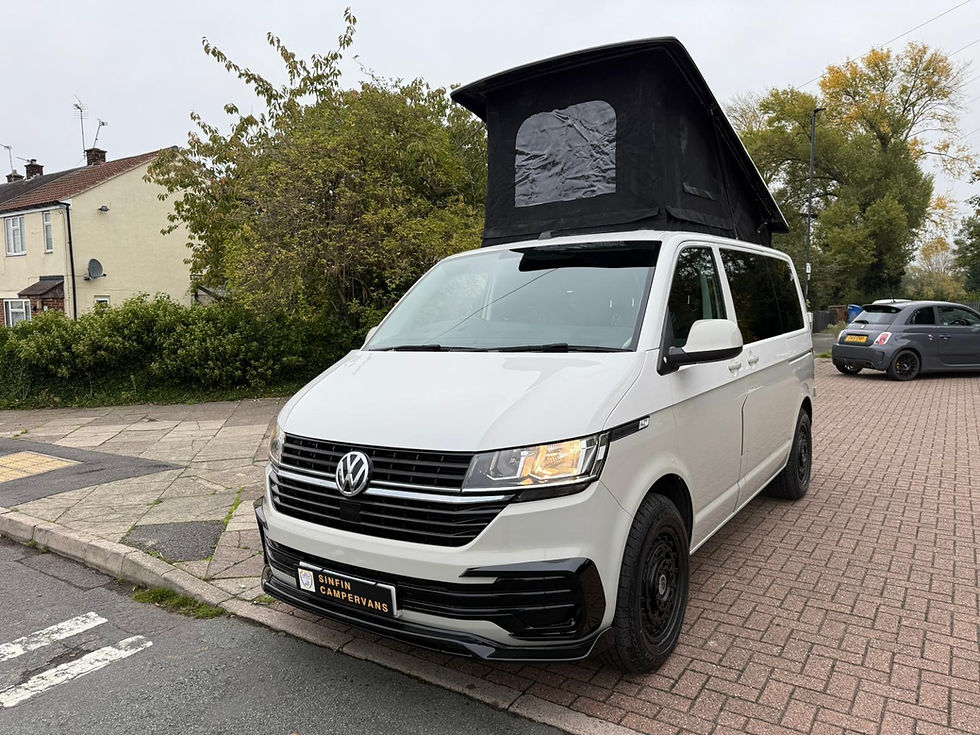
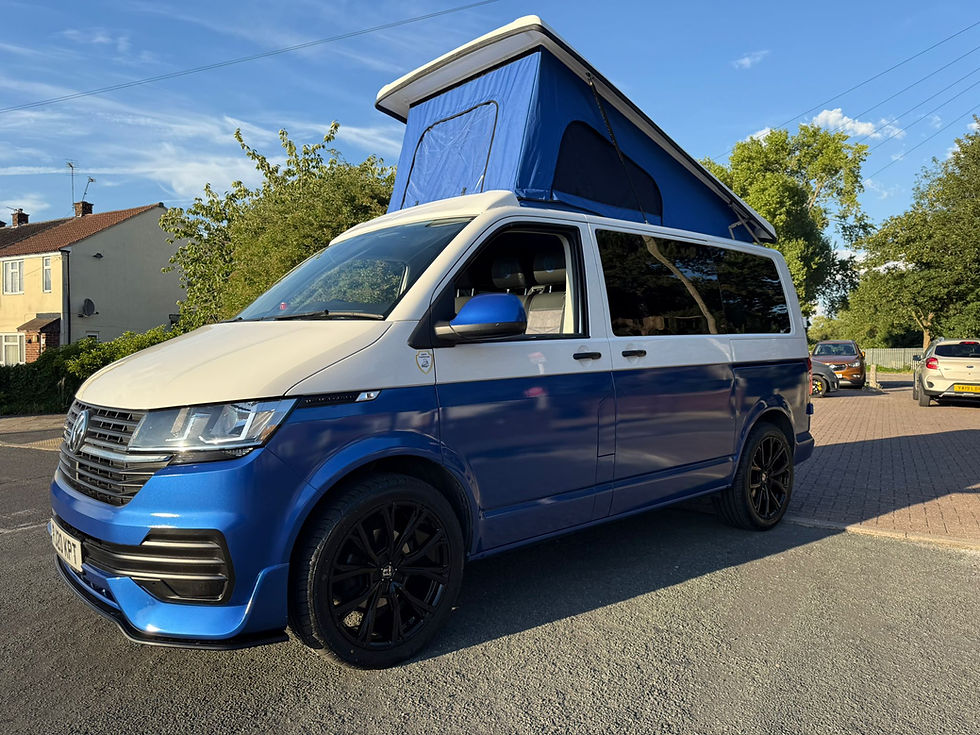
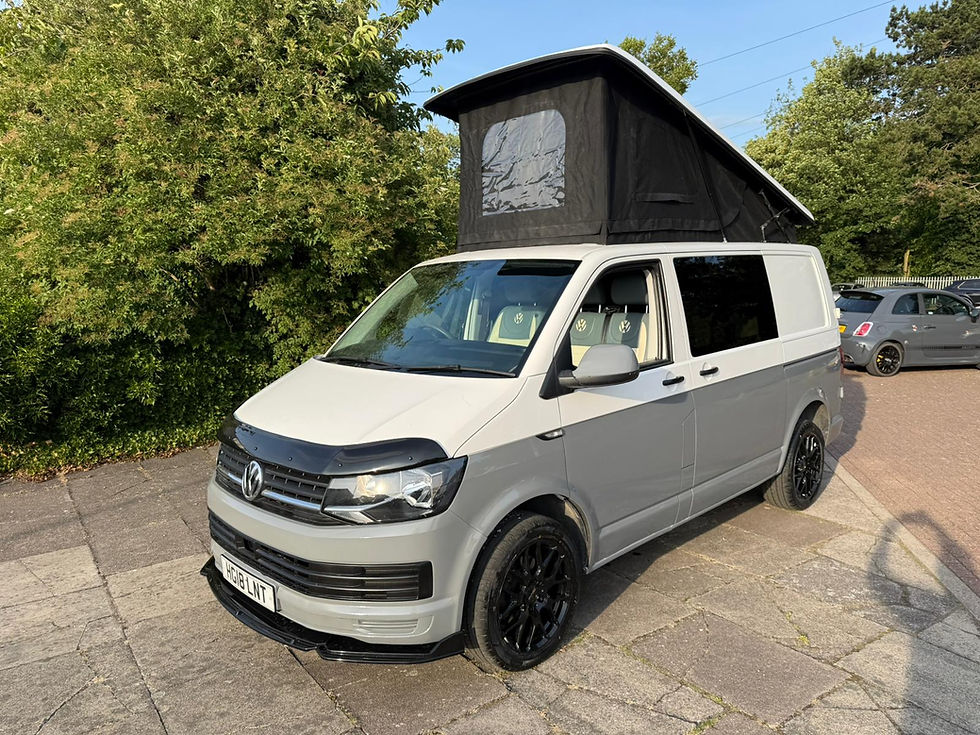
High-top roof (note: elevating pop-top roofs is not counted as a “high top” under this guidance).
Internal features (DVLA expects to see)
A table and seats (the table can be removable).
A dedicated sleeping space, which may be converted from seats.
Cooking facilities.
Storage facilities.
If your conversion meets the bill on the inside and the outside, you can apply to have your body type changed to “motor caravan.” (See GOV.UK guidance for forms, photo requirements and where to send your evidence.)
Do I have to register as a motor caravan?
No. If you’re simply using the van for weekends or even living in it, you can do so legally without changing the body type, provided the vehicle is road-legal. But there are practical benefits to being recorded as a motor caravan when you do meet the criteria.
Why register? Real-world benefits owners notice
Insurance that reflects leisure use
Insurers price risk differently for leisure vehicles than for commercial vans. When your V5C shows “motor caravan,” it often supports:
Access to specialist campervan policies.
Premiums that can be lower than a comparable panel van used for trade (many owners see savings, though exact discounts vary by insurer and driver profile).
Contents cover that’s more aligned to personal items (camping gear, clothing) rather than trade tools.
(Note: Always compare policies and declare all modifications. “Motor caravan” body type isn’t a guarantee of cheaper premiums; it just puts you in the right underwriting bucket.)
MOT class (for heavier campers)
If your camper’s MAM (maximum authorised mass) falls between 3,000–3,500 kg, being registered as a motor caravan typically brings you under the Class 4 MOT rather than Class 7, which is often easier to book and slightly cheaper, depending on the test centre.
Speed limits & use
Many Transporter-based campers fall under the standard car-derived limits on UK roads. As a rule of thumb, if your van is classified as a motor caravan and within certain weight thresholds, the posted dual carriageway limit (up to 60 mph) can apply. Always verify your vehicle’s category/weight and keep to signed limits.
Ferries & Eurotunnel fares
Some operators base fares on your vehicle’s body type, as shown on the V5C. With “motor caravan,” you may find it easier to access camper pricing brackets. (Plenty of operators will price by look/length regardless, but a matching logbook keeps things consistent.)
Common sticking points (and how to avoid them)
Pop-top ≠ high top
DVLA’s current reading is that a fixed high-top counts; a pop-top alone usually does not. If you rely on a pop-top for headroom, you’ll need to ensure you exceed the other exterior cues (windows, awning rail, graphics) and still understand DVLA may refuse if overall appearance doesn’t match a motor caravan.
“Looks like a van” exterior
A beautifully fitted interior won’t help if the outside still looks like a plain panel van. Windows, graphics and an awning rail are surprisingly essential cues.
Evidence quality
DVLA expects clear photos: front, back, both sides (showing graphics/windows/awning rail), roofline, plus detailed interior shots (table up, bed down, cooking facilities, storage). Blurry photos or incomplete angles slow the process.
Seat & bed safety
If you’ve fitted a rock ’n’ roll or RIB seat/bed, keep the fitting documentation. While this is more about safety and insurance than DVLA’s body-type decision, having an orderly paper trail helps future insurers and buyers.
Step-by-step: getting your paperwork right
Audit your features against the external and internal lists above.
Photograph everything outside (all angles) and inside (each feature), in good light.
Gather proofs: invoices for windows/awning rail/roof, furniture, cooker/fridge, bed/seat system.
Update your V5C: complete the body type change request to “motor caravan” and send it with your evidence as per GOV.UK guidance.
Be patient and precise: if DVLA asks for more evidence, reply with clear, labelled photos.
Is it worth applying if I’m borderline?
If you’re missing a key exterior cue (e.g., no graphics, no awning rail, pop-top only), DVLA may refuse the change. In those cases, you can still insure and run the vehicle, just expect to be classed as a van with modifications. If you’re heading toward resale, though, motor caravan status remains attractive when the van clearly meets the guidance.
How Sinfin can help
We build Transporter conversions that live well day-to-day and respect UK expectations for safety and documentation. If you want your van to be DVLA-friendly, we can:
Advise on exterior cues (windows, graphics, awning rail, high-top options).
Design interiors that clearly show the expected features (table, sleeping, cooking, storage).
Prepare a photo/evidence pack to support your application.
Explore our Services for conversion packages and upgrades.
Browse current Vans for Sale (many already meet the criteria)
Contact us to discuss your conversion or evidence pack.
Example scenarios (quick guidance)
Family SWB with pop-top: Add side windows (beyond cab), awning rail, graphics, and ensure the interior shows table/sleep/cook/store. Pop-top alone won’t count as a high top.
Touring LWB high-top: You’re in strong shape, make sure the exterior looks the part (graphics/windows) and the interior is well-documented.
Stealth build: If you want “no-window” stealth looks, you’ll likely stay as a van/MPV on the V5C. That’s fine, just align your insurance accordingly.
FAQs
Do I need a “motor caravan” to get camper insurance?
Not always many insurers will cover converted vans. But V5C, as a “motor caravan”, often simplifies underwriting.
Will DVLA refuse me because of the pop-top?
Not automatically, but a pop-top doesn’t count as a high-top. Ensure the rest of your exterior ticks DVLA’s cues and understand they judge overall appearance.
Will my speed limits change?
It depends on vehicle category and weight. A Transporter-based motor caravan within certain mass thresholds can follow posted car-like limits on many roads. Always check your exact classification and local signage.
Is Class 4 MOT guaranteed if I get a “motor caravan”?
For vans weighing 3,000–3,500 kg, registration as a motor caravan typically places you in Class 4. Confirm weight and check with your test centre.


Comments